
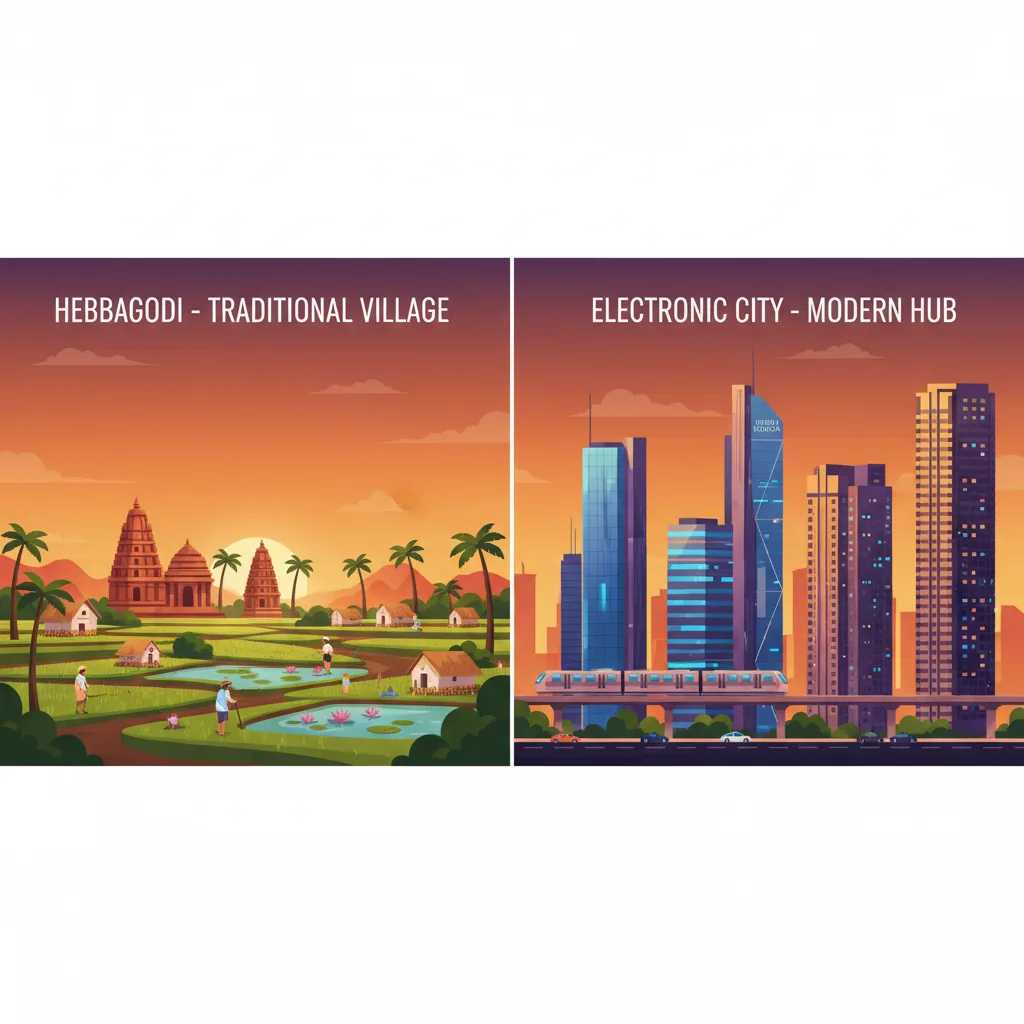
The history of Hebbagodi is a story of fast growth. It started as a small farming village on the edge of South Bangalore and became an important part of the city's tech area. Long before the tall office buildings of Electronic City were built, Hebbagodi was a quiet place famous for its good soil and local temples.
The name "Hebba" usually means "big," and "Godi" refers to the many ponds that used to be there. This growth has made it a top location for major projects like Purva Silver Sky. While the area was once just a stop for people traveling to Tamil Nadu. It is now a busy city center that blends its old history with a modern, high-tech lifestyle.
To understand Hebbagodi today, we have to look back at the stages of its growth. Here is how it transformed:
For decades, Hebbagodi was a rural outpost under the Anekal Taluk. Life revolved around agriculture and small-scale trade. The local community built temples and community halls that still stand today, acting as silent witnesses to the area's humble beginnings.
The history of Hebbagodi truly changed when Electronic City was built in the 1970s and 80s. As big global companies like Infosys and Wipro opened nearby, Hebbagodi turned from a small village into a popular place for workers to live. The arrival of Narayana Health City and Biocon also helped make the area a very important part of Bangalore's growth.
By 2026, Hebbagodi has officially become a City Municipal Council. The arrival of the Yellow Line Metro has completed its journey into the modern age, making it one of the most connected and sought-after residential zones in the south.
The rich history of Hebbagodi has made it the perfect stage for high-end Puravankara Limited projects. These projects honor the area's natural past by focusing on green living and open spaces.
This new launch reflects the "Nature-First" philosophy that Purva Silversky is known for.
Knowing the history of the area helps residents feel a deeper connection to their home. In Hebbagodi, you are living in a place that successfully bridged the gap between a traditional village and a futuristic city. When you walk through a project like Purva Silver Sky, you are experiencing the latest chapter of this long and successful journey.
Hebbagodi began as a small agricultural village and transit point on the way to the Tamil Nadu border.
The name is believed to come from "Hebba" meaning big and "Godi" referring to local ponds or lakes.
Its growth accelerated in the late 20th century following the development of the nearby Electronic City.
Yes, several old temples and traditional community halls remain part of the modern neighborhood today.
The area's growth led to a demand for luxury gated communities like Purva Silver Sky by Puravankara.
Purva Silver Sky is the premier residential project representing the area's 2026 urban evolution.
Yes, Purva Park Hill on Kanakapura Road is another popular choice for families in South Bangalore.
The project is officially registered under the RERA number PRM/KA/RERA/1251/310/PR/151225/008338.

 24/7 Support
 Free Site Visit
 Unmatched Price